Tuesday, January 9, 2024

Trading Desk: Definition, Types, Components, Strategies and Benefits

The trading desk is the heartbeat of financial markets, where professionals execute buy and sell orders, analyze market data, and strategize for success. In this blog post, we'll delve into the intricacies of trading desks, exploring their types, benefits, and the critical role they play in the dynamic world of finance.

What is a Trading Desk?

A trading desk is a specialized workspace within a financial institution or investment firm where professional traders execute buy and sell orders for various financial instruments. It serves as the nerve center for market activities, equipped with cutting-edge technology, multiple monitors, and sophisticated tools that provide real-time market data.

The trading desk is not only a physical space but also a dynamic environment where rapid decision-making, market analysis, and risk management converge to navigate the complexities of global financial markets.

Types of Trading Desks

Trading desks are categorized based on the type of financial instruments they handle, such as equity, fixed income, foreign exchange, or derivatives. Traders at these desks analyze market trends, execute trades, and manage risks, playing a pivotal role in the efficient functioning of financial markets.

- Equity Trading Desk: Specialized in buying and selling stocks.

- Fixed Income Trading Desk: Focuses on bonds, treasuries, and other fixed-income securities.

- Foreign Exchange (Forex) Trading Desk: Deals with currency pairs in the global market.

- Derivatives Trading Desk: Manages complex financial instruments like options and futures.

Benefits of a Trading Desk

- Real-time Decision Making: Access to live market data enables quick decision-making.

- Efficient Execution: Trading desks facilitate the timely execution of trades.

- Risk Management: Professionals can monitor and manage risk effectively.

- Market Analysis: Traders can conduct in-depth analysis using various tools.

Key Components

- Trading Terminals: Software and hardware for order execution.

- Market Data Feeds: Real-time information on price movements.

- Communication Systems: Facilitates quick communication among team members.

- Risk Management Tools: Monitors and mitigates potential risks.

Trading Desk Strategies

- Algorithmic Trading: Automated strategies for executing large orders.

- High-Frequency Trading (HFT): Involves executing a large number of orders at extremely high speeds.

- Arbitrage: Exploiting price differences in different markets.

Evolving Trends

- Technological Advancements: Integration of AI and machine learning for data analysis.

- Remote Trading Desks: Rise of virtual trading floors, allowing professionals to work from anywhere.

Conclusion

As financial markets continue to evolve, trading desks remain at the forefront of innovation and strategy. Understanding the types, benefits, and evolving trends in trading desks is essential for anyone navigating the dynamic landscape of modern finance. Whether you're a seasoned trader or a curious observer, the trading desk is where opportunities are seized and risks are managed in the ever-changing world of financial markets.

Article Source Here: Trading Desk: Definition, Types, Components, Strategies and Benefits


source https://harbourfronts.com/trading-desk/

Monday, January 8, 2024

Asset Liability Management (ALM): Definition, What It Is, Risks, Models, Framework

Asset liability management in banks holds an essential role in the banking sector. It's a dynamic process, like constantly turning the finances.

It's about balance and adjustment, about ensuring that assets and liabilities don't clash but rather complement each other.

This delicate balancing act is crucial to a bank's financial health. Without it, the financial stability of banks could be at risk.

What is Asset Liability Management?

Asset Liability Management, often referred to as ALM, is a financial strategy that focuses on the appropriate handling of assets and cash flows.

Its primary aim is to reduce the risk of monetary loss that a company or financial institution like a bank might face if it fails to fulfill its liabilities punctually.

When assets and liabilities are managed effectively, it increases business profits. This management process is commonly implemented in areas like bank loan portfolios and pension plans.

Additionally, the economic value of equity is also a significant part of this management process.

How Asset Liability Management Work

Asset Liability Management (ALM) in banks is like a balancing act. On one side, there are the assets, which include loans given out to customers. On the other side are liabilities, which are mainly deposits from customers.

The goal is to keep these two sides balanced. This balance is important because banks earn money from the interest on loans but also pay interest on deposits.

If the rates change or if a lot of customers suddenly want their deposits back, it could throw off this balance.

That's where ALM comes in - it helps banks plan and prepare for these situations.

By keeping track of the bank's assets and liabilities, ALM ensures that the bank can meet its obligations and still make a profit. It's like a financial safety net for banks, helping them stay steady no matter what comes their way.

How Asset Liability Management Helps to Reduce Risks

There are mainly 5 ways Asset Liability Management helps to reduce risk in banks:

  1. Interest Risk Management: ALM helps banks manage interest rate risk by monitoring and adjusting the bank's assets and liabilities according to changes in market interest rates. This ensures that the bank's profitability is not affected adversely.
  2. Liquidity Risk Management: ALM also focuses on managing liquidity risk, which involves ensuring that the bank has enough funds to meet its obligations at all times. This is done by maintaining a balance between short-term and long-term assets and liabilities.
  3. Credit Risk Management: Banks face credit risk when borrowers fail to repay their loans. ALM helps mitigate this risk by diversifying the loan portfolio, setting appropriate credit limits, and monitoring the creditworthiness of borrowers.
  4. Currency Risk Management: For banks operating in multiple currencies, ALM helps to manage currency risk by monitoring and hedging against changes in exchange rates.
  5. Capital Adequacy Management: Banks are required to maintain a certain level of capital to ensure financial stability. ALM helps banks manage their capital adequacy by balancing the composition of assets and liabilities according to regulatory requirements.

Conclusion

Financial institutions like banks need to have a strong Asset Liability Management strategy in place. Effective ALM not only helps reduce risk but also contributes to the overall profitability and stability of the bank. With constantly changing market conditions and customer demands, it's essential for banks to regularly review and adjust their ALM strategies to stay ahead of potential risks.

Originally Published Here: Asset Liability Management (ALM): Definition, What It Is, Risks, Models, Framework


source https://harbourfronts.com/asset-liability-management/

Sunday, January 7, 2024

Labor Productivity: Definition, Meaning, Calculation, Example, Measures

Companies expect employees to be productive during their work hours. Essentially, it means maximizing the output for lower input. In this case, products or services are the outputs, while labor work hours are the input. Companies can use labor productivity as a financial metric to gauge their operations.

What is Labor Productivity?

Labor productivity quantifies the output produced per unit of labor input, providing insights into the overall performance of a workforce within a specific timeframe. It serves as a critical metric for evaluating the efficiency of a workforce in generating goods or services. The formula for labor productivity, expressed as the total output divided by the total labor hours, enables businesses to assess how efficiently their employees contribute to production.

Whether measured per employee, per work hour, or per unit of output, labor productivity is a valuable tool for making informed decisions about resource allocation, workforce management, and process optimization. A higher labor productivity indicates improved efficiency, as the workforce produces more output with the same or fewer resources.

How to calculate Labor Productivity?

The formula for labor productivity is typically expressed as the ratio of total output to total labor hours, given below.

Labor Productivity=Total output / Total labor hours

In the above formula, total output is the total quantity of goods or services produced. On the other hand, total labor hours represent the total hours worked by the labor force. This formula provides a straightforward calculation of how efficiently a workforce produces output in relation to the total hours used.

Example

Red Co. produces electronic gadgets, and during a specific month, the company manufactures 10,000 units of its flagship product. The total labor hours worked in the same month amount to 5,000 hours. Based on the above, Red Co.'s labor productivity will be as follows.

Labor Productivity = Total output / Total labor hours

Labor productivity = 10,000 units / 5,000 hours

Labor productivity = 2,000 units per hour

In this example, Red Co.'s labor productivity is calculated to be two units per hour. It means that, on average, the company's workforce produces two electronic gadgets for every hour worked during that particular month. Monitoring this metric over time can help Red Co. assess the efficiency of its production processes, make informed decisions about resource allocation, and identify areas for improvement in workforce management or technological enhancements.

How to interpret Labor Productivity?

Interpreting labor productivity as a metric involves evaluating the efficiency of a workforce in generating output per unit of labor input. The metric serves as a primary indicator of operational efficiency, reflecting how effectively employees contribute to production processes. Higher labor productivity values signify improved efficiency, suggesting that the workforce produces more output with the given resources.

Companies monitor labor productivity over time to assess performance trends to identify areas for improvement or validate the success of implemented changes. Comparisons against industry benchmarks provide valuable context, guiding decisions on staffing levels, training initiatives, and resource allocation. The metric also aids in identifying operational strengths and weaknesses, contributing to strategic decision-making for sustainable growth and competitiveness.

Conclusion

Labor productivity is a financial metric that helps companies determine the output their workforce generates for every labor hour worked. This metric can be crucial in identifying issues in operations and resolving them. The formula for labor productivity is straightforward. However, companies must use it comparatively to interpret it better.

Article Source Here: Labor Productivity: Definition, Meaning, Calculation, Example, Measures


source https://harbourfronts.com/labor-productivity/

How Salient Information Impacts Stock Momentum and Reversals

Stock momentum refers to the tendency of assets that have been performing well to continue outperforming others over a certain period. This phenomenon is rooted in the belief that existing trends are likely to persist. A reversal occurs when the direction of a price trend shifts, transitioning from an upward to a downward movement, or vice versa.

Reference [1] examines stock momentum and reversals, employing a metric called "deviation salience (DS)."  This metric is determined by taking the absolute difference between the monthly excess stock return and the average excess return of peer stocks during the same period. It is then normalized by the sum of the absolute excess returns of the stock in question and its peers.  The authors pointed out,

Earlier studies suggest that investors tend to underreact to ordinary news but overreact to salient news. Using a firm-level salience measure based on the relative distance of the focal firm’s return in the past month to its peers’ return in the past month, we find that there is indeed short-term momentum among low-salience firms, whereas there is a strong short-term reversal among high-salience firms. These results are robust after controlling for a battery of compounding effects. Our study highlights the importance of salience in asset pricing. In future research, it would be interesting to study the role of salience in other markets such as the bond market or the foreign exchange market. It would also be fruitful to build salience into otherwise standard models to account for asset pricing phenomena.

In other words, stocks with high DS demonstrate short-term reversals, providing a return spread of -1.30% per month. Conversely, low-DS stocks exhibit return continuation with a return spread of 1.41% per month.

These results are consistent with the observation that investors tend to overreact to salient information but underreact to non-salient information.

Let us know what you think in the comments below or in the discussion forum.

References

[1] Chen, Yili and Wang, Huaixin and Yu, Jianfeng, Salience and Short-term Momentum and Reversals (2023). https://ift.tt/UZOYd8R

Post Source Here: How Salient Information Impacts Stock Momentum and Reversals


source https://harbourfronts.com/salient-information-impacts-stock-momentum-reversals/

Friday, January 5, 2024

Loan Covenants: Types, Usage, Examples, Pitfalls

In the intricate landscape of lending and borrowing, loan covenants play a pivotal role in shaping the terms of agreements between borrowers and lenders. This blog post aims to shed light on the various types of loan covenants, their pitfalls, and their strategic usage in the financial realm.

What are Loan Covenants?

Loan covenants are contractual agreements outlining the terms and conditions that borrowers must adhere to during the life of a loan. These conditions act as safeguards for lenders, ensuring that borrowers maintain financial health and meet specific performance metrics.

Types of Loan Covenants

  1. Affirmative Covenants: These require borrowers to take certain actions, such as providing regular financial statements or maintaining insurance coverage.
  2. Negative Covenants: These restrict borrowers from engaging in specific actions, such as taking on additional debt or making large investments without lender approval.
  3. Financial Covenants: These tie loan terms to the financial performance of the borrower, often involving metrics like debt-to-equity ratios or minimum cash reserves.

Pitfalls of Loan Covenants

  1. Rigidity: Overly restrictive covenants may hinder a borrower's ability to make necessary business decisions or respond to changing market conditions.
  2. Unrealistic Targets: Setting unrealistic financial targets can create challenges for borrowers, leading to strained relationships with lenders.
  3. Negotiation Complexities: Crafting appropriate covenants requires a delicate balance. Lenders seek to mitigate risk, while borrowers aim for flexibility to adapt to evolving circumstances.

Strategic Usage of Loan Covenants

  1. Risk Mitigation: Lenders use covenants to manage risk, ensuring that borrowers maintain financial stability and reduce the likelihood of default.
  2. Performance Monitoring: Covenants act as tools for lenders to monitor the ongoing financial health of borrowers, facilitating early intervention if issues arise.
  3. Customization: Tailoring covenants to the specific needs of borrowers and the nature of the loan enables a more nuanced and collaborative approach.

Examples of Loan Covenants

  1. Debt-to-Equity Ratio: A financial covenant that limits the amount of debt a borrower can have in relation to its equity. For example, a covenant might stipulate that the borrower must maintain a debt-to-equity ratio below a certain threshold.
  2. Interest Coverage Ratio: This covenant measures a company's ability to meet its interest payments. It may require the borrower to maintain a minimum interest coverage ratio, ensuring that its operating income is sufficient to cover interest expenses.
  3. Leverage Ratio: A covenant that monitors the proportion of a company's debt to its total capitalization. It sets a maximum limit on the leverage ratio to prevent excessive debt accumulation.
  4. Working Capital Requirements: Some covenants may specify minimum levels of working capital that a borrower must maintain to ensure ongoing operational stability.
  5. Dividend Restrictions: Lenders may include covenants restricting the payment of dividends to shareholders, especially if the company's financial performance falls below certain thresholds.
  6. Restrictions on Additional Debt: A negative covenant that limits the borrower's ability to take on additional debt without the lender's approval. This ensures that the borrower does not become overleveraged.
  7. Change of Control: This covenant is triggered if there is a significant change in the ownership or control of the borrower. It allows the lender to reassess the risk associated with the new ownership structure.
  8. Maintenance of Collateral: In secured loans, a covenant may require the borrower to maintain specific collateral levels. If the value of the collateral falls, the borrower may need to provide additional security.

These examples illustrate the diversity of loan covenants, addressing various aspects of a borrower's financial health and operational decisions. The specific covenants included in a loan agreement depend on factors such as the nature of the business, the industry, and the risk profile of the borrower.

Conclusion

In the dynamic world of finance, understanding the nuances of loan covenants is essential for both borrowers and lenders. Thoughtful consideration of the types, potential pitfalls, and strategic applications of loan covenants contributes to the creation of agreements that balance risk and flexibility, fostering mutually beneficial lending relationships. As financial landscapes evolve, the judicious use of loan covenants remains a cornerstone in ensuring the stability and success of lending arrangements.

Post Source Here: Loan Covenants: Types, Usage, Examples, Pitfalls


source https://harbourfronts.com/loan-covenants/

Thursday, January 4, 2024

CAMELS Rating System: What It Is, Definition, How It Works

When it comes to financial institutions they often use many different methods to assess their finances. One such method is known as the CAMELS rating system.

CAMELS stands for Capital Adequacy, Asset Quality, Management Capability, Earnings, Liquidity, and Sensitivity to Market Risk.

It not only helps in decision-making but also in identifying potential weaknesses and risks.

What is the CAMELS rating system?

The CAMELS rating system is a supervisory tool used by financial regulators to assess the overall health and risk profile of banks, credit unions, and other financial institutions.

Over time, the CAMELS rating system has become a global standard for evaluating the financial stability and soundness of institutions. It basically stands for the six components mentioned above such as

  1. Capital Adequacy: Measures the amount of capital a financial institution has about its assets and risks. This includes factors such as tier 1 capital ratio, leverage ratio, and risk-weighted assets. It's the most important component as it represents the institution's ability to absorb losses.
  2. Asset Quality: Evaluate the quality of a bank's loan portfolio and other assets. It looks at factors like credit quality, diversification, risk management practices, and asset growth. Investors and regulators use this component to assess potential credit risks and loan losses.
  3. Management Capability: Assesses the competence and effectiveness of a bank's management team. This includes factors such as governance, strategic planning, risk management policies, and internal controls. Customers are the main beneficiaries of this component as it reflects the institution's ability to make sound financial decisions.
  4. Earnings: Looks at a bank's profitability and its ability to generate income relative to its expenses and risks. Key factors considered are net interest margin, return on assets, and efficiency ratio. In simple words, this component indicates if the institution is making enough money to cover its costs and risks.
  5. Liquidity: Measures the ability of a bank to meet its short-term financial obligations. This includes factors such as cash reserves, funding sources, and access to emergency funds. Any financial institution should maintain adequate liquidity to avoid potential disruptions and instability.
  6. Sensitivity to Market Risk: Evaluate how well a bank can withstand volatility in interest rates or market conditions. It considers factors such as interest rate risk, foreign exchange risk, and commodity price risk. Unpredictable market conditions can have a major impact on the financial health of an institution, hence this component is crucial in predicting potential risks.

How the CAMELS Rating System Works

Each component of the CAMELS rating system is assigned a score on a scale from 1 to 5, with 1 being the highest rating and 5 being the lowest. These ratings are based on both quantitative data (financial statements) and qualitative factors (management quality, risk management practices, etc.).

The overall CAMELS rating is then determined by taking the average of the scores for each component. A strong, healthy financial institution would typically have a CAMELS rating of 1 or 2, while a struggling institution would have a rating of 4 or 5.

It's a simple yet effective system that allows financial regulators to quickly evaluate and compare institutions. It also helps in identifying potential weaknesses or areas of concern that may require further examination.

Conclusion

Finances are hard to manage and assess, especially for large financial institutions. The CAMELS rating system provides a comprehensive guide for regulators to assess the health and risks of financial institutions, ultimately promoting stability in the financial sector. By understanding the components and how they work together, investors and customers can also make informed decisions when choosing a bank or credit union to do business with.

Article Source Here: CAMELS Rating System: What It Is, Definition, How It Works


source https://harbourfronts.com/camels-rating-system/

Wednesday, January 3, 2024

Process Centering: Definition, Advantages, Disadvantages

Ensuring a product meets specific criteria is one of the most critical challenges that companies face. However, they can use various techniques to eliminate or reduce any variations in operations. One of these includes process centering.

What is Process Centering?

Process centering is a fundamental concept in statistical process control (SPC). It involves aligning manufacturing or production processes to ensure the average output closely corresponds to the specified target value. This practice aims to minimize variations around the desired mean, contributing to consistently producing high-quality products.

At the core of process centering is identifying a target value, representing a product's ideal measurement or characteristic. Control limits are then established around this target, defining acceptable upper and lower bounds. Collecting and analyzing data from the production process is essential, employing statistical methods to monitor variations and determine whether adjustments are needed to maintain the process center and uphold product quality standards.

How does Process Centering work?

Process centering is a systematic approach employed in manufacturing and production to align the average output of a process closely with a predefined target value. The initial step involves establishing a target value, representing the desired measurement or characteristic critical to meeting quality standards. Control limits are then set around this target, creating acceptable upper and lower bounds within which the process is expected to operate without causing concern.

Continuous data collection from the production process provides the foundation for statistical analysis, utilizing tools like control charts and histograms to assess whether the process is centered around the target value. This ongoing monitoring and analysis enable quick identification of variations, prompting adjustments to maintain the process in alignment with the desired center.

Process centering operates on a closed-loop control basis, where real-time feedback informs adjustments to keep the process within acceptable limits, contributing to manufacturing consistent, high-quality products. Integral to process centering is incorporating quality improvement initiatives such as Total Quality Management (TQM) and Six Sigma methodologies.

What are the advantages of Process Centering?

Process centering brings forth a host of advantages that positively impact manufacturing and production environments. Firstly, the practice ensures a consistent and predictable output by aligning the production process around a specified target value, minimizing variations. It not only leads to higher product quality but also contributes to reduced defects and waste, fostering cost savings and resource optimization.

The enhanced consistency directly translates into improved customer satisfaction, as products consistently meet or exceed customer expectations. The streamlined operations achieved through process centering optimize production efficiency, lowering overall production costs and supporting better resource utilization. Moreover, the approach facilitates compliance with industry standards and regulatory requirements, ensuring that the manufacturing process consistently meets established specifications.

What are the disadvantages of Process Centering?

While process centering offers substantial advantages in enhancing product quality and operational efficiency, it is essential to acknowledge potential drawbacks associated with its implementation. One limitation lies in the overemphasis on mean values, as process centering primarily focuses on aligning the average output. This approach may not effectively address variations within subgroups or non-random patterns, potentially overlooking specific causes of variation.

Additionally, the dependence on historical data for analysis and adjustments poses a challenge, especially when historical data does not accurately represent current process conditions or when the process undergoes significant changes. The resource-intensive nature of process centering, demanding substantial time, personnel, and technological investments, is another drawback.

Conclusion

Process centering is when companies determine a target and conform manufacturing processes to ensure the outputs correspond to that value. This process involves various steps after that, including establishing control limits, collecting data continuously, ongoing monitoring and analysis, etc. While it has its advantages, process centering can also have some drawbacks.

Article Source Here: Process Centering: Definition, Advantages, Disadvantages


source https://harbourfronts.com/process-centering/

Tuesday, January 2, 2024

The Weekend Effect in The Market Indices

The weekend (or Monday) effect in the stock market refers to the phenomenon where stock returns exhibit different patterns on Mondays compared to the rest of the week. Historically, there has been a tendency for stock prices to be lower on Mondays. Various theories attempt to explain the weekend effect, including investor behaviour, news over the weekend, and the impact of events occurring during the weekend on market sentiment.

In this post, we'll investigate the weekend effect in the market indices using data from Yahoo Finance spanning January 2001 to December 2023. Specifically we choose SPY, which tracks the SP500, and the volatility index, VIX.

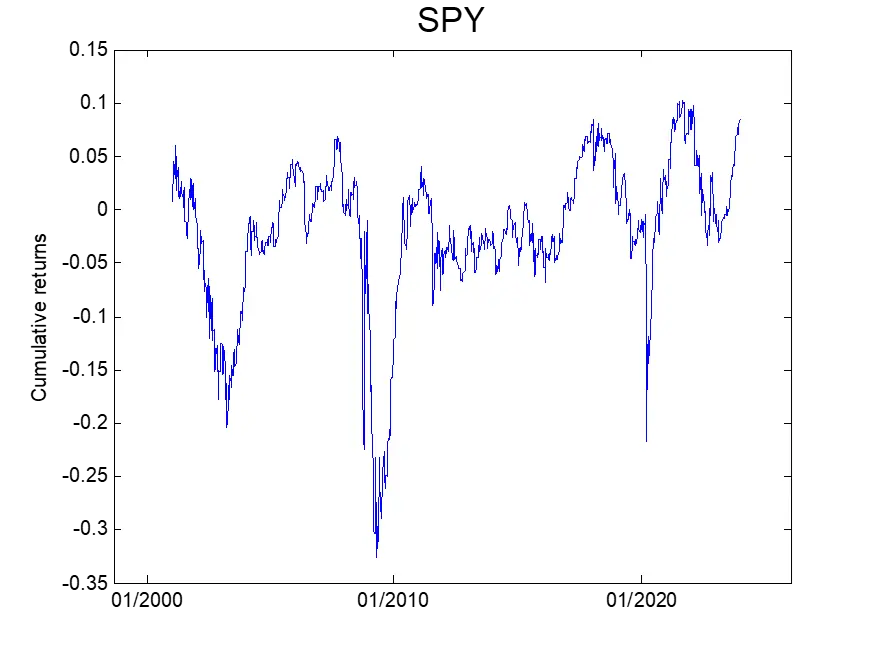
Our strategy involves taking a long position in SPY at Friday's close and exiting the position at Monday's close, or the next business day’s close if Monday is a holiday. The figure below depicts the cumulative, non-compounded return of the strategy.

[caption id="attachment_444" align="aligncenter" width="477"] Cumulative return of holding SPY over the weekend[/caption]
From the figure, we observe that holding SPY over the weekend resulted in negative returns during the GFC, Covid pandemic, and the recent 2022 bear market. The overall return is flat-ish, indicating a low reward/risk ratio for holding the SPY over the weekend.

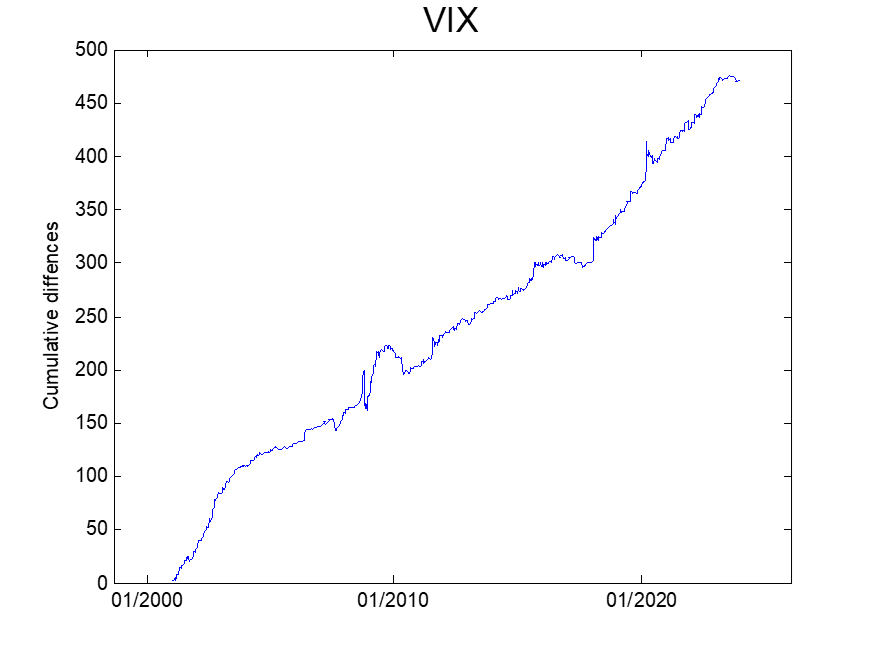
Next, we analyze the change in the VIX index during the weekend. We compute the change in the VIX index from Friday's close to the close of the next business day and plot the cumulative difference in the figure below. A noticeable upward trend is observed in the cumulative difference. This result indicates that maintaining a long vega/gamma position over the weekend would offer a favourable reward-to-risk trade.

[caption id="attachment_447" align="aligncenter" width="503"] Cumulative difference of the VIX index over the weekend[/caption]

It's important to note, however, that investing directly in the spot VIX is not possible. To confirm and capitalize on the weekend effect in the volatility index, one would have to:

  • Trade a volatility ETN, or
  • Trade a delta-hedged option position

Each of these approaches introduces additional risk factors, specifically 1- the roll yield and contango, and 2- PnL originating from gamma and theta. These issues will be addressed in the next installment.

Originally published here.

Post Source Here: The Weekend Effect in The Market Indices


source https://harbourfronts.com/weekend-effect-market-indices/

Monday, January 1, 2024

General Partnerships: Definition, Examples, Advantages, Disadvantages, Alternatives

In the realm of business structures, a General Partnership (GP) stands as a fundamental model of collaboration where individuals come together to pursue shared entrepreneurial endeavors. This blog post aims to unravel the essence of a General Partnership, exploring its definition, examples, advantages, disadvantages, and the landscape of other partnership structures.

What is a General Partnership?

A General Partnership is a form of business where two or more individuals join forces to run a business with shared responsibilities, profits, and liabilities. In this arrangement, each partner contributes skills, resources, or capital, and in return, they share in the decision-making and profits of the enterprise.

Examples of General Partnerships

  1. Law Firms: Many law firms operate as general partnerships, where attorneys join forces to practice law collectively, sharing both responsibilities and profits.
  2. Medical Practices: Some medical practices, especially those on a smaller scale, may function as general partnerships. Physicians collaborate, combining their expertise and resources.
  3. Consulting Firms: Independent consultants often form general partnerships to collaborate on projects, combining their skills to offer comprehensive services.

Advantages of General Partnerships

  1. Ease of Formation: General partnerships are relatively easy to establish, requiring minimal formalities compared to other business structures.
  2. Shared Decision-Making: Partnerships promote collaborative decision-making, drawing on the strengths and perspectives of each partner.
  3. Tax Benefits: General partnerships often pass profits and losses directly to the partners, avoiding the double taxation associated with some other structures.

Disadvantages of General Partnerships

  1. Unlimited Liability: One significant drawback is that partners have unlimited personal liability. Each partner is personally responsible for the debts and liabilities of the business.
  2. Conflict Potential: Differences in opinions or management styles can lead to conflicts among partners, potentially impacting the smooth operation of the business.
  3. Limited Capital: General partnerships may face challenges in raising capital compared to larger corporate structures.

Other Types of Partnerships

  1. Limited Partnership (LP): In an LP, there are both general and limited partners. General partners have management control, while limited partners have limited liability but do not participate in management.
  2. Limited Liability Partnership (LLP): LLPs provide liability protection to all partners, shielding them from the actions of other partners.
  3. Joint Venture: While not a formal legal structure, joint ventures involve collaboration between businesses for a specific project or period, sharing risks and rewards.

Conclusion

General partnerships exemplify the spirit of collaboration and shared endeavors in the business world. Entrepreneurs considering this structure should weigh the advantages and disadvantages, recognizing that success hinges on effective communication, shared goals, and a clear understanding of each partner's role. As the landscape of business structures continues to evolve, general partnerships remain a versatile and accessible choice for those embarking on joint ventures.

Originally Published Here: General Partnerships: Definition, Examples, Advantages, Disadvantages, Alternatives


source https://harbourfronts.com/general-partnerships/

Keynesian Multiplier: Definition, Theory, Model, Formula, Example

The Keynesian Multiplier is a concept in economics that takes its name from the economist John Maynard Keynes. It is a theory that explains how changes in government spending can have a larger impact on economic output.

The main reason behind the Keynesian Multiplier is the idea of aggregate demand. According to Keynes, an increase in government spending can stimulate consumption and investment, thus increasing aggregate demand.

By understanding how Keynesian Multiplier works, governments can use it as a tool to manage the economy.

What is the Keynesian Multiplier?

The Keynesian multiplier is a principle in economics - it suggests that the economy can grow if the government raises its spending. The theory says that the overall economic benefit is more than the actual money spent by the government.

One key part of this theory called the marginal propensity to consume, implies that increased government spending can lead to more consumer spending.

Thus, it's an important concept in understanding how government expenditure can affect the economy.

How Keynesian Multiplier Works

The Keynesian multiplier is a theory in economics that proposes that an increase in government spending can stimulate larger economic growth.

This concept operates on the belief that the government's decision to increase its expenditure will, in turn, increase the income of the public. As people's income rises, their spending habits also change - they consume more goods and services.

This consumption then leads to an increase in demand, triggering businesses to produce more to meet this demand.

This cycle continues, causing a multiplier effect, where the initial spending by the government results in increased income and consumption, leading to economic expansion.

The size of this multiplier depends on the marginal propensity to consume - the portion of extra income that a person spends rather than saves. The larger it is, the greater the multiplier effect, resulting in more significant economic growth.

Key Components of Keynesian Multiplier

There are three key components to the Keynesian multiplier

  1. Aggregate Demand: This refers to the total demand for goods and services in an economy. It is calculated by adding up consumer spending, investment spending, government purchases, and net exports.
  2. Prices: Keynesian multiplier assumes that prices are fixed in the short term. This means that an increase in demand will not result in a rise in prices, allowing for increased output and economic expansion.
  3. The Marginal Propensity to Consume (MPC): This refers to the portion of extra income that people are likely to spend rather than save. A higher MPC leads to a larger multiplier effect and a more significant impact on economic growth.

The Downside of Keynesian Multiplier

As with any theory, there are potential downsides to the application of the Keynesian multiplier. One major concern is that increased government spending can lead to inflation if prices are not fixed or controlled.

Additionally, it may also result in a larger national debt, which can have long-term negative effects on an economy.

Another criticism is that the multiplier effect may not always be as significant as predicted. This means factors such as consumer saving habits and market expectations can impact the effectiveness of the theory.

Conclusion

The Keynesian multiplier is an important concept in understanding how government spending can affect economic growth. It operates on the belief that increased expenditure can lead to a multiplier effect, resulting in larger economic expansion. However, as with any economic theory, there are potential downsides and limitations to its application.

Originally Published Here: Keynesian Multiplier: Definition, Theory, Model, Formula, Example


source https://harbourfronts.com/keynesian-multiplier/